John F. Kennedy

Major Accomplishments

Kennedy’s economic programs launched the country on its longest sustained expansion since World War II. He promoted social legislation, including a federal desegregation policy in schools and universities, along with Civil Rights reform. And in formation of the Alliance for Progress and the Peace Corps, he brought Americans to the aid of developing nations.


In the height of the Cold War period, Kennedy displayed moderation and a firm hand in foreign policy. In April 1961, a force of anti-Castro Cubans, under direction of the U.S. Central Intelligence Agency prior to Kennedy’s election, failed in their invasion of Cuba at the Bay of Pigs. Kennedy accepted responsibility for this political misstep, which was considered an enormous setback in foreign relations. At the risk of all-out nuclear war, Kennedy engaged in a showdown with the Soviet Union over its missile installations in Cuba, which were ultimately withdrawn by the Soviets in October 1962. Kennedy attempted to slow the arms race by negotiating a partial nuclear test ban treaty with the Soviet Union in 1963.


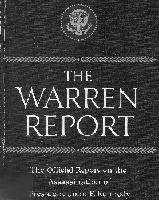
On November 22, 1963, Kennedy was assassinated by rifle fire while being driven in an open car through Dallas, Texas. The alleged assassin, twenty-four year old Lee Harvey Oswald, was shot and killed by night club owner Jack Ruby two days later, while under heavy police escort on a jail transfer. Much controversy remains concerning the Kennedy assassination, and speculation about conspiracy theories abounds, despite the Warren Commission’s conclusion that Oswald most likely acted alone.  People believe that there was more than that.

The shooters view

Literature connection